
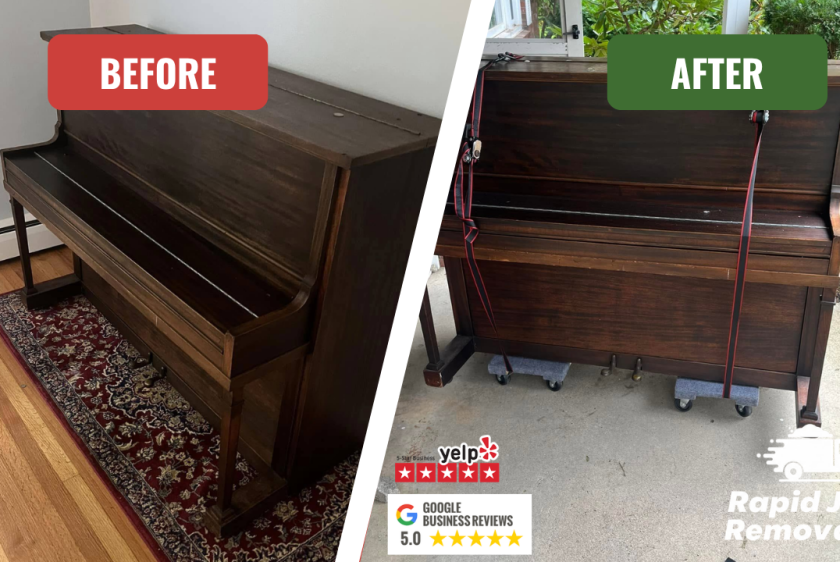
Why Piano Removal Is So Difficult: Stairs, Equipment, and Heavy Lifting
A piano can sit in the same room for decades without anyone thinking about how it will eventually get out. Then it is time to sell a home, clear an estate, finish a basement, or reclaim a room—and suddenly that old upright becomes the most difficult item in the house to remove.
Piano removal takes more than a truck and a couple of strong people. Stairs, awkward weight distribution, narrow doorways, and the route to the vehicle all affect the job. At Rapid Junk Removal RI, we look at those details before planning a piano removal and disposal in Rhode Island.
Why Is a Piano So Difficult to Remove?
An acoustic piano contains much more than a wooden cabinet. Its internal frame, strings, soundboard, and action contribute to a heavy, bulky object that can be difficult to grip. For perspective, Yamaha’s upright piano specifications list models weighing several hundred pounds. The exact weight depends on the instrument.
Size and balance matter just as much as weight. A tall upright can tip if it is handled incorrectly, while a grand piano presents a different footprint and support requirements. Old cabinet joints, damaged legs, and small original casters can also make an apparently simple move more complicated.
Even if you no longer want the piano, your floors, walls, doorways, and staircase still need protection during removal.
Stairs Can Be the Hardest Part of Piano Removal
A piano on the ground floor with a wide exit is a very different job from one in a basement or upstairs bedroom. Even a few porch steps can change the equipment and crew needed.
Before a stair removal, the route needs to be assessed for:
- Stair width and condition: The crew needs room to control the load, and the stairs must be suitable for the planned removal.
- Landings and turns: A narrow landing or sharp turn may prevent a piano from passing in one piece.
- Headroom and door clearance: Low ceilings, railings, and door frames can limit the available route.
- Exterior conditions: Sloped walkways, uneven ground, wet steps, and distance to the truck affect handling.
A rolling dolly that works on a level floor is not automatically appropriate for stairs. Stair work requires a separate plan, suitable equipment, and a crew that can maintain control throughout the route. Some locations require specialist assistance or a different approach after an assessment.
The Equipment Matters: Dollies, Straps, and Floor Protection
There is no single piece of equipment that makes every piano easy to remove. The setup needs to match the instrument and the property.
- Piano dollies and heavy-duty rolling dollies: Properly rated equipment helps support and move the load across suitable level surfaces. Small household furniture dollies may not be suitable.
- Moving straps: Appropriate handling straps can help a trained crew control a load. They do not replace adequate staffing or a safe route.
- Transport straps and tie-down points: Once loaded, the piano and any loose components need to be secured against movement during travel.
- Moving blankets and protective padding: These help protect vulnerable surfaces where the piano passes close to walls and door frames.
- Floor protection: Suitable protection helps reduce the risk of scratches and concentrated wheel loads on flooring.
- Loading equipment: A properly rated ramp or liftgate may be needed, depending on the vehicle and the job.
The piano’s original little wheels are not a substitute for a removal setup. They may be worn or seized, and pushing a heavy piano across a room can damage flooring or cause the instrument to become unstable.
Enough Manpower—and Room to Work
There is no universal crew size for every piano. The type of piano, its condition, the number of stairs, and the available working space determine staffing needs.
Adding more people does not solve every problem, either. A tight staircase may leave very little room for anyone to stand or reposition. Coordinated handling, clear communication, and a planned route matter as much as strength.
This is why we ask about access before quoting a piano removal. A straight path through a garage is different from a basement staircase with a turn at the top.
You Also Need the Right Truck or Trailer
Getting the piano out of the house is only part of the job. The vehicle must have enough payload capacity, appropriate loading access, and secure tie-down points for the load and equipment.
Loading height, ramp suitability, parking distance, and the surface between the house and vehicle all matter. A piano at the bottom of a driveway can still be difficult to load if the driveway slopes or the truck cannot park nearby. Transport also needs to end at a facility that accepts the material.
Sometimes a Piano Needs to Be Disassembled
Some unwanted pianos cannot reasonably be removed intact through the available route. In those cases, partial or more extensive disassembly may be considered after assessing the instrument, the access, and the owner’s wishes.
Disassembly does not automatically make a piano light. The internal frame can remain extremely heavy after exterior pieces are removed. Strings under tension, sharp components, and unstable parts also make dismantling a job that requires appropriate expertise.
If you want the piano preserved for playing, resale, or a family member, say so before work is arranged. Disposal and instrument relocation require different plans. A piano intended for continued use should be assessed by an appropriate piano moving specialist.
Why Piano Removal Pricing Depends on Access
Two similar-looking pianos can require very different amounts of work. Pricing depends on the instrument’s size and condition, stairs and tight turns, the distance to the vehicle, staffing and equipment needs, any necessary disassembly, and disposal requirements.
Giving away a piano does not necessarily solve the removal problem. A willing recipient still needs a suitable transport plan, and donation organizations may decline instruments based on condition, demand, or collection limitations.
What to Send Us for a Piano Removal Quote
To help us understand the job, text 401-360-5837 with:
- A clear photo of the entire piano and its approximate dimensions.
- Your city or town and the floor where the piano is located.
- Photos of any stairs, landings, doorways, and tight turns along the exit route.
- The number of indoor and outdoor steps.
- A photo of the path to the driveway or parking area.
- Whether you need disposal or are hoping to keep the piano intact.
Please leave the piano in place while we review the access. You do not need to bring it outside or attempt to get it down the stairs first.
Piano Removal Help in Rhode Island
Whether you are removing one unwanted upright or including a piano in a larger home or estate cleanout, we can review the job and explain the next steps. We are a local, insured junk removal business serving Rhode Island and nearby Massachusetts communities.
Need an old piano gone? Learn more about our piano removal service, or call/text 401-360-5837. Send photos of the piano and access route for a fast, free quote.


 Piano Disposal & Removal in RI and Southern MA